The LEGO Botanicals Hanging Golden Pothos (11512) might be one of the most realistic plants LEGO has ever designed. It might also be one of the most overpriced.
When LEGO revealed it, I loved almost everything about it. The trailing vines looked realistic, the variegated leaves reminded me of the pothos plants I’ve owned, and I could already picture it hanging on one of my shelves.
The only thing I couldn’t justify was the $59.99 price tag. Compared to other LEGO Botanicals sets, it felt expensive, and I kept wondering if the build and finished display could really justify the cost.
I planned to buy it anyway because I wanted to review it, but before release day I found it at Costco for $45. After spending about an hour building it, my opinion changed… just not in the way I expected.
I still don’t think it’s worth paying full price, but after seeing it in person, I also think it’s one of the easiest LEGO Botanicals sets to blend into real home decor. That left me with one question: is it worth buying, or is it only worth buying on sale?
In this LEGO Botanicals Hanging Golden Pothos review, I’ll share what surprised me, what disappointed me, how it compares to other LEGO Botanicals houseplants, and whether I think it’s worth buying at $59.99 or if you’re better off waiting for a sale.
Quick Verdict
If you’re looking for a realistic LEGO houseplant that blends naturally into your home decor, the LEGO Botanicals Hanging Golden Pothos (11512) is one of the best options in the collection. The flexible vines, realistic leaves, and included planter make it feel more like a decorative plant than a traditional LEGO display.
The biggest drawback is the price. At $59.99, I don’t think it offers the same value as several other LEGO Botanicals sets. After buying mine for $45 at Costco, though, my opinion changed quite a bit. At that price, I’d happily recommend it.
Buy this if:
- You want one of the most realistic LEGO Botanicals sets.
- You enjoy decorating your home with LEGO plants.
- You like customizing and shaping the hanging vines.
- You can find it on sale for around $45.
Skip this if:
- You’re planning to pay full retail price.
- Value matters more to you than realism.
- You prefer colorful flower bouquets over houseplants.
- You’re looking for a larger build for your money.
- You move or rearrange your displays often.
My verdict: Wait for a sale. The Hanging Golden Pothos is one of the most realistic LEGO Botanicals sets I’ve built, but the small finished size and fragile stand make $59.99 hard to justify. At around $45, I think the design becomes much easier to recommend.
👉 Check current price and availability here
Some links in this post are affiliate links. If you choose to buy through them, Nanibricks may earn a small commission at no extra cost to you. Your support helps keep the blog thriving and blooming.
Table of Contents
Quick Set Details
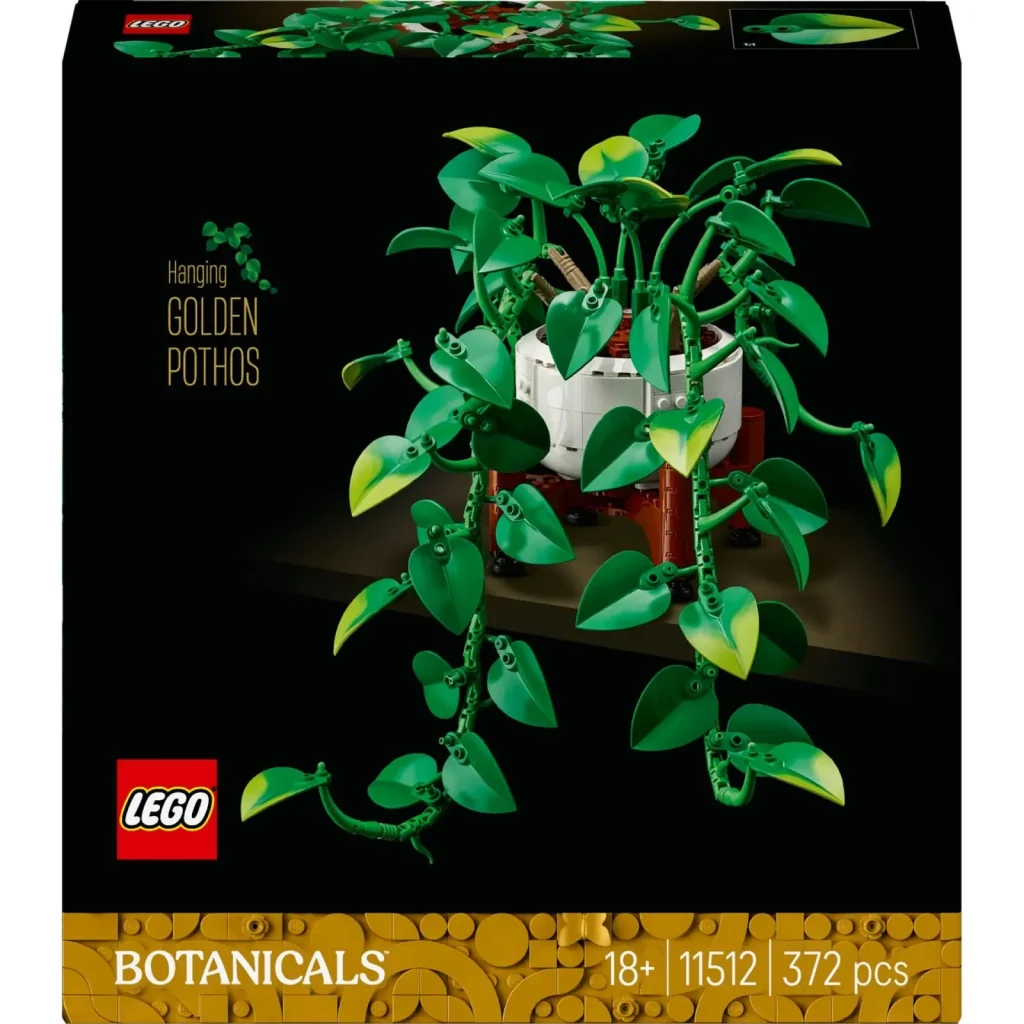
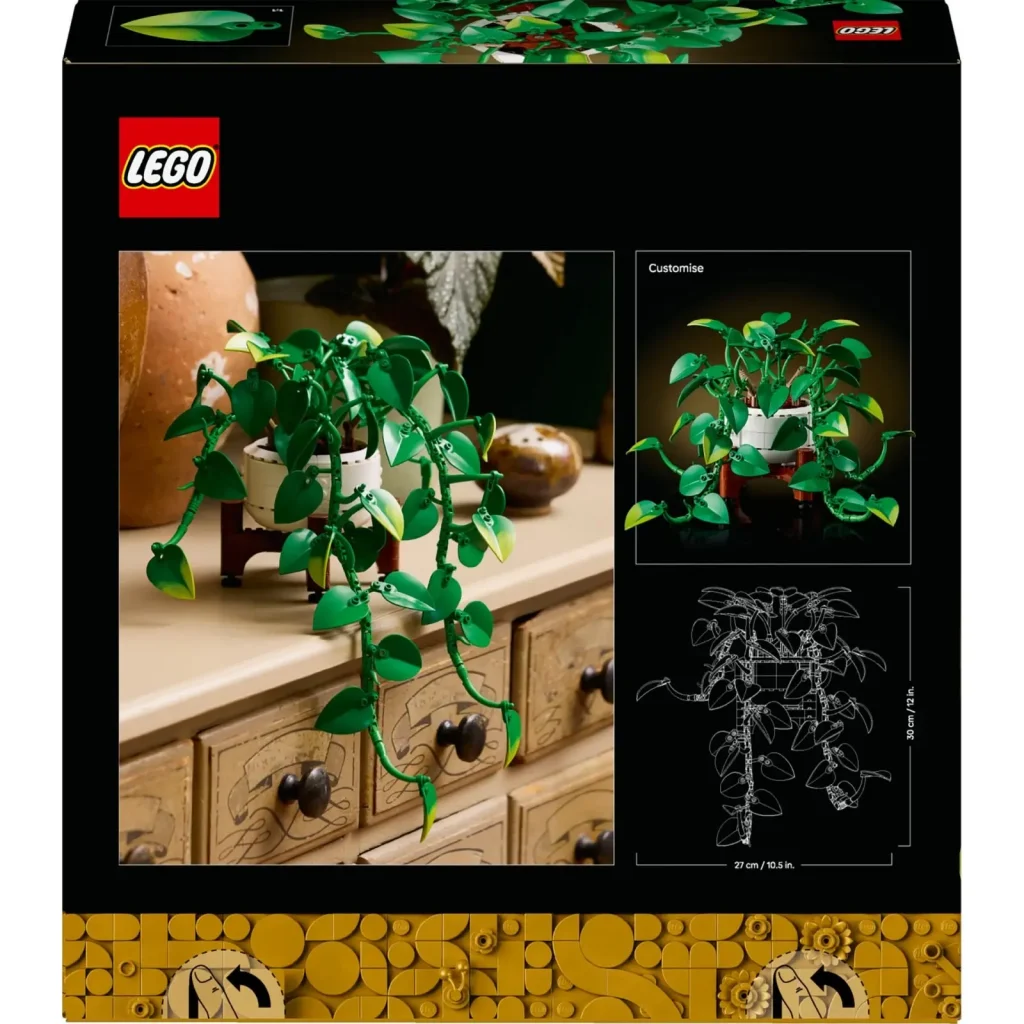
👉 Check current price and availability here
Before we get into the full review, here are the key details for the LEGO Botanicals Hanging Golden Pothos (11512).
- Set Name: LEGO Botanicals Hanging Golden Pothos
- Set Number: 11512
- Piece Count: 372 pieces
- Age Rating: 18+
- Retail Price: $59.99
- Release Date: August 1, 2026
- Build Time: Around 1 hour
- Bags: 4 numbered bags
Display Size
- Over 11.5 in. (30 cm) high with two long vines
- Over 5 in. (13 cm) high with four shorter vines
- Pot measures approximately 6.5 in. (16 cm) tall
One of my favorite things about this set is that you can display it in two completely different ways. You can build it with two long trailing vines, which is the version I preferred, or rearrange it into four shorter vines for a more compact look.
Unlike the flower bouquets, the Hanging Golden Pothos comes with its own planter, so it’s ready to display as soon as the build is finished. The movable leaves and flexible vines also make it easy to reshape the plant until it looks exactly the way you want.
👉 Check current price and availability here
Build Experience: LEGO Botanicals Hanging Golden Pothos (11512)
Building the LEGO Botanicals Hanging Golden Pothos (11512) took me about an hour, and it quickly became clear this wasn’t going to feel like a typical LEGO Botanicals bouquet.
Instead of repeating the same flowers over and over, each bag introduced something new. Watching the planter slowly fill with trailing vines made the build feel more like growing a real houseplant than assembling a display model.
It wasn’t perfect, though. One part of the build kept slowing me down, and by the final bag, I had a much better understanding of why my opinion about this set had changed.
Let’s take a look at how each bag comes together.
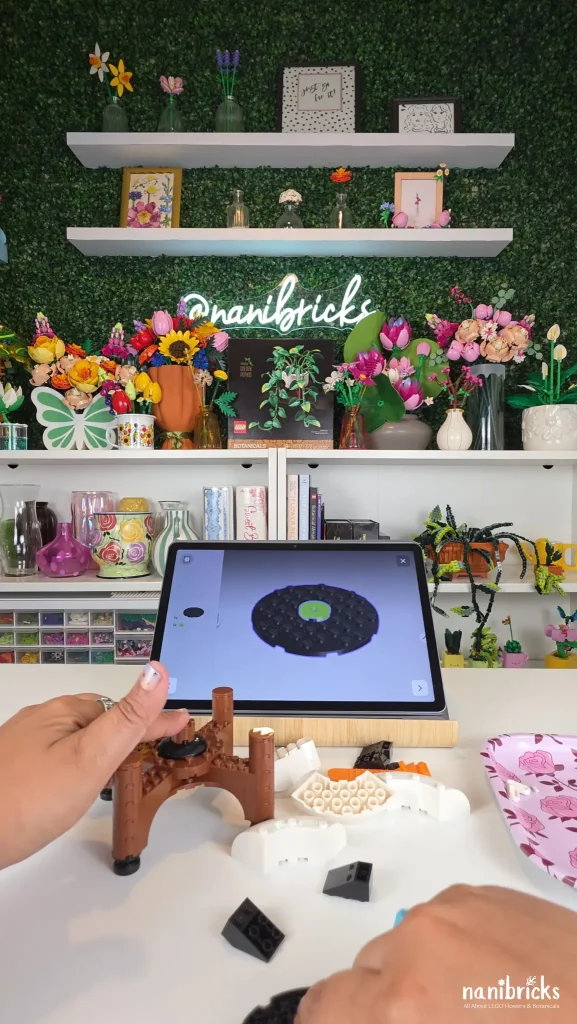
Bag 1: Building the Stand and Planter
The first bag builds the “wooden” stand and the lower half of the white planter. While it isn’t the most exciting part of the build, it creates the foundation for everything that comes later.
One detail I immediately appreciated was LEGO’s use of rubber tires as feet. It’s a small touch, but it helps keep the planter from sliding while you’re adjusting the vines later. As the planter came together, I also realized the finished model would be more compact than I expected for a $59.99 set, which reinforced my concerns about the price.

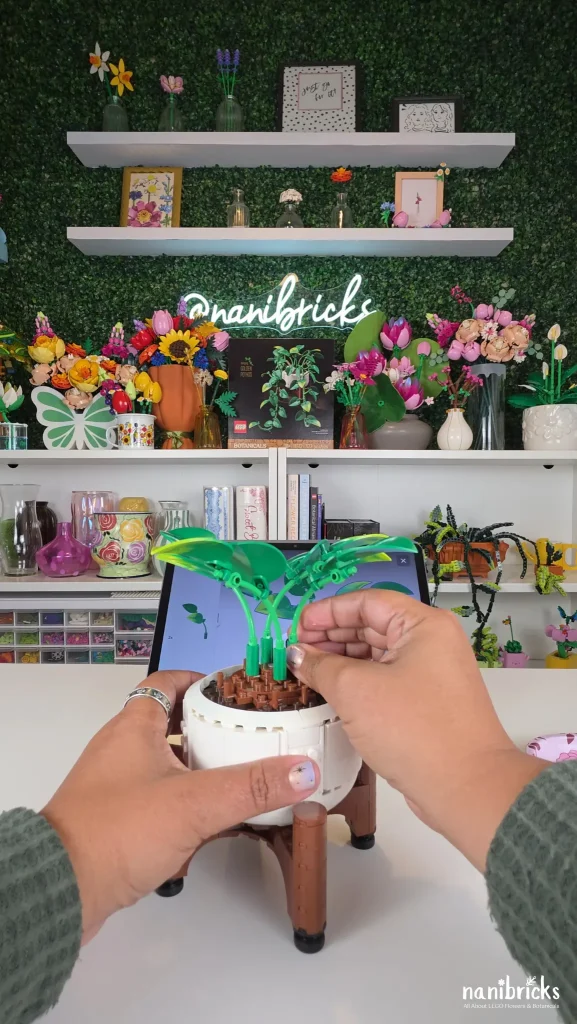
Bag 2: Building the Pot and Center Vines
Bag 2 finishes the planter by adding the brown “soil” insert before introducing the center vines.
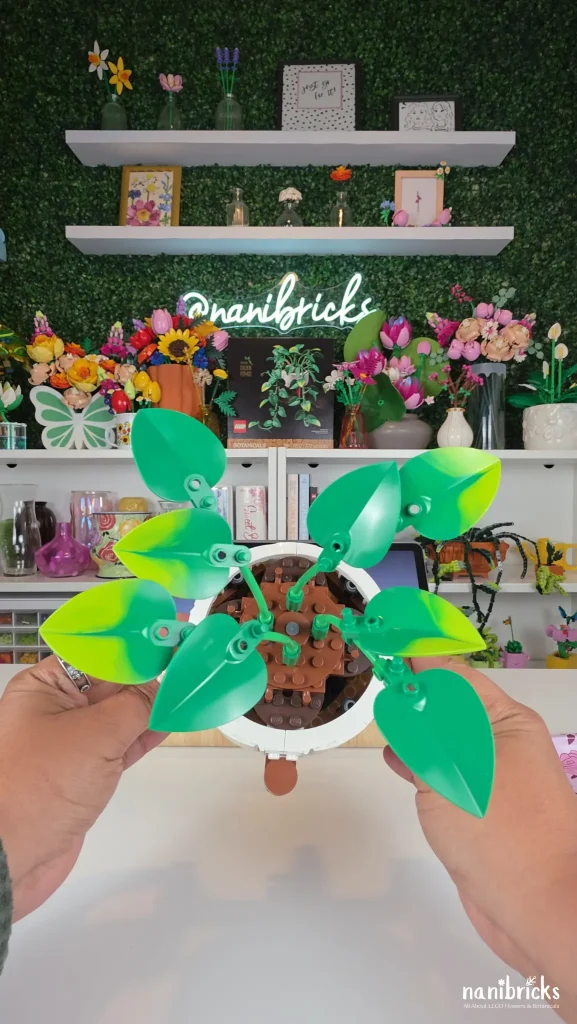
This was also my first chance to see the variegated leaves up close. The mix of light and dark green looks much better in person than it does in LEGO’s promotional photos, and it immediately made the plant feel more realistic. At this point, I found myself getting much more excited to see the finished display.
Bag 3: The First Hanging Vine
Bag 3 is where the set finally starts looking like a real golden pothos.
Adding the first long trailing vine completely changes the personality of the build. I also loved how flexible the vine sections are. Instead of locking everything into one position, LEGO lets you curve the vines and rotate the leaves until they look more natural. This was the point where I stopped thinking about the price and simply enjoyed watching the plant come together.


Bag 4: Bringing the Plant to Life
The final bag adds the second long vine and completes the remaining foliage.
Once everything was attached, I spent several minutes shaping the leaves and trying both display options. I kept coming back to the version with two long trailing vines because it captures the relaxed look of a real pothos much better than the four shorter vines.
This was also where I ran into my only real frustration. While adjusting the vines, I accidentally knocked a few pieces loose from the top section of stand more than once. It wasn’t difficult to fix, but it interrupted what had otherwise been a very relaxing build. At the time, I thought this was only an assembly issue, but after living with the set, I’ve realized the stand remains one of its weakest points.


Overall Build Experience
Overall, I really enjoyed building the LEGO Botanicals Hanging Golden Pothos (11512). Each bag introduced something different, so the build never felt repetitive, and watching the vines gradually spill over the edge of the planter made the finished model feel like it was growing right in front of me.
The top section of the stand was the one part that gave me trouble during assembly, and unfortunately that issue did not completely disappear after the build. I’ve had parts of the stand come loose several times while moving the finished model, even though the planter, vines, and leaves themselves have held up well.
Looking back, the build itself wasn’t what changed my opinion the most. Seeing the finished plant displayed on my shelf did. That’s when I finally understood why so many people were excited about this set, even if I still think $59.99 is more than it should cost.
Design and Color Palette
One of the things I was most curious about before building the LEGO Botanicals Hanging Golden Pothos (11512) was whether it would actually look like a real pothos. The promotional photos looked promising, but LEGO’s official images don’t always match what you see in person.
Thankfully, this is one area where the set exceeded my expectations.
The first thing that caught my attention was the variegated leaves. Instead of using a single shade of green, LEGO mixed light and dark green to recreate the marbled pattern that makes real golden pothos so recognizable. The effect is much more noticeable in person, and from a few feet away, it genuinely looks more like a houseplant than a LEGO model.
I also appreciate that LEGO kept the color palette simple. There are no flowers or bright accent colors competing for attention. The different shades of green give the plant a more mature look, making it surprisingly easy to blend into almost any decorating style. Whether your home leans modern, cozy, Scandinavian, or full of houseplants, this set feels like it belongs there.
Another detail I didn’t fully appreciate until after the build was the flexibility of the vines and leaves. You’re not locked into one arrangement. You can bend the vines, rotate the leaves, and tweak the shape until it looks the way you want. I found myself spending several extra minutes styling the plant after I finished building it, and honestly, that became one of my favorite parts of the experience.
The more I adjusted the vines, the more I understood why so many people were excited about this set. It’s one of the few LEGO Botanicals that made me stop noticing the bricks and start seeing the plant.
That doesn’t change my opinion on the price. I still think $59.99 is too expensive, but I can also understand why so many people fell in love with the design after seeing it in person.

Durability and Long Term Display
This is the part of my review that changed the most after living with the LEGO Botanicals Hanging Golden Pothos (11512) for a while.
During the build, I mentioned that a few pieces from the stand came loose while I was attaching and adjusting the vines. At the time, I thought it was mostly an assembly issue that would disappear once everything was finished.
Unfortunately, that hasn’t been my experience.
I’ve moved the pothos several times while rearranging my shelves, and the stand is much more fragile than I initially thought. On multiple occasions, I’ve picked it up to move it and had pieces come loose. A few times, a large section of the stand has partially fallen apart in my hands.
The planter and vines themselves have held up well. The leaves stay attached, the vines can still be reshaped without problems, and the finished plant looks sturdy when it’s sitting in place. The weak point is specifically the stand underneath the planter.
That makes moving the set more annoying than it should be. I now make sure to support the planter and stand carefully from underneath instead of grabbing it quickly and moving it like I would most LEGO Botanicals sets.
For a display model that costs $59.99, I think this is a real design weakness. It doesn’t ruin the set for me because once it’s sitting on a shelf, I rarely have problems with it. But if you rearrange your decor often, move your LEGO plants around to clean, or like changing your displays regularly, the fragile stand is something you should know about before buying it.
I still love how easy the vines are to reshape and how realistic the plant looks once displayed, but I would no longer describe the entire model as especially sturdy. The plant itself holds up well. The stand does not.

Display and Styling Ideas
One of my favorite things about the LEGO Botanicals Hanging Golden Pothos (11512) is that it doesn’t need to be the center of attention to look good. Unlike most LEGO Botanicals sets, this one works more like a real houseplant by adding greenery, texture, and movement to a space instead of becoming the main focal point.
After trying it in different places around my home, I quickly realized the two long trailing vines are the better display option. The vines hang naturally over the edge of a shelf, giving the plant a much more realistic look than the version with four shorter vines. Once I saw them side by side, I never felt tempted to switch back.
I think this set looks especially good on:
- Bookshelves
- Floating shelves
- Kitchen cabinets
- Office shelves
- Plant corners
- Entryway consoles
Because the planter has a compact footprint, it’s also easy to pair with other LEGO Botanicals without making the display feel crowded. I especially like it next to Peace Lily, Lucky Bamboo, or Tiny Plants, where the different heights create a more natural indoor plant collection.
One thing I learned very quickly is that height matters. The trailing vines are the best part of this set, so placing it at eye level or higher lets them hang naturally instead of resting on the shelf. That small change makes the display look much more convincing.
After living with it for a while, I actually think the finished model looks better in my home than it does in LEGO’s promotional photos. Once the vines are shaped and the leaves are adjusted, it stops looking like a LEGO set and starts looking like part of the room.

How It Fits Within the LEGO Botanicals Collection
The LEGO Botanicals Hanging Golden Pothos (11512) fills a different role than most sets in the collection. While the flower bouquets are designed to add color and become the focal point of a room, the Hanging Golden Pothos works more like a real houseplant by adding greenery and texture.
Compared to Peace Lily (11504), the display feels completely different. Peace Lily is designed to sit upright on a table or shelf, while the Hanging Golden Pothos naturally draws your eye downward with its trailing vines. If you’re decorating bookshelves, cabinets, or plant corners, I actually prefer the Hanging Golden Pothos because it creates more movement.
I also enjoyed styling it more than Lucky Bamboo (10344). Lucky Bamboo has a clean, structured appearance that stays the same after the build, while the Hanging Golden Pothos encourages you to keep adjusting the vines and leaves until you’re happy with the final look. Even after finishing the build, I found myself making small tweaks every time I walked past it.
If you’re deciding between this set and one of the flower bouquets, the choice really comes down to your decorating style. Choose a bouquet if you want color and a centerpiece. Choose the Hanging Golden Pothos if you want something that quietly complements the space around it.
Even though I still think $59.99 is too much, I also think this is one of the most distinctive houseplants in the LEGO Botanicals collection. If you already own a few bouquets and want something that looks completely different, this is an easy set to recommend, especially if you can find it on sale.
Frequently Asked Questions
Is the LEGO Botanicals Hanging Golden Pothos (11512) worth buying?
Yes, especially if you can find it on sale. It’s one of the most realistic LEGO Botanicals sets, but I don’t think it offers the best value at its $59.99 retail price.
How long does it take to build the LEGO Hanging Golden Pothos?
The build took me about one hour. The set is divided into four numbered bags, and each one adds a different part of the planter or plant, keeping the experience varied and relaxing.
Can you display the LEGO Hanging Golden Pothos in different ways?
Yes. You can build it with two long trailing vines or rearrange it into four shorter vines. I personally prefer the two long vines because they look much more like a real pothos.
Are the vines flexible?
Yes. The vines and leaves can be bent and repositioned after the build, making it easy to customize the shape of the plant and create a more natural display.
Is the LEGO Hanging Golden Pothos sturdy?
The plant itself is sturdy once displayed, but the stand is more fragile than I expected. I’ve had pieces, and sometimes a larger section of the stand, come loose several times when moving it.
Where does the LEGO Hanging Golden Pothos look best?
I think it looks best on bookshelves, floating shelves, cabinets, office shelves, and plant corners where the trailing vines have room to hang naturally.
Is the LEGO Hanging Golden Pothos a good gift?
Yes. It’s a great gift for LEGO Botanicals collectors, houseplant lovers, or anyone who enjoys home decor. Its realistic design appeals even to people who don’t usually display LEGO sets.
Is the LEGO Hanging Golden Pothos bigger than it looks?
Not really. I expected it to be larger based on the promotional photos, but the finished model has a compact footprint. The long trailing vines help it look much larger once it’s on display.
Final Thoughts
When LEGO first revealed the LEGO Botanicals Hanging Golden Pothos (11512), I expected it to be one of the most realistic plants in the collection. After building it, I can confidently say it lived up to those expectations.
What surprised me wasn’t the build itself. It was how different the finished model looked once I found the right place for it. After shaping the vines and placing it on a shelf, it stopped feeling like another LEGO set and started feeling like part of the room.
That still doesn’t change my opinion on the price. At $59.99, I think there are better values in the LEGO Botanicals collection. But after buying mine for $45, I stopped judging it by its piece count and started appreciating it for what it does well.
The fragile stand also makes the full retail price harder for me to justify. It hasn’t stopped me from enjoying the set on display, but a $59.99 decorative model should be easier to move without part of the base coming apart.
Would I buy it again? Absolutely.
Would I pay full price? Probably not.
If you love decorating with LEGO and want one of the most realistic LEGO Botanicals houseplants, I think you’ll be very happy with this set. If you can wait for a sale, I think you’ll be even happier with your purchase.
| Category Rating | |
|---|---|
| Build Experience | ⭐⭐⭐⭐☆ |
| Display | ⭐⭐⭐⭐☆ |
| Durability | ⭐⭐☆☆☆ |
| Value | ⭐⭐☆☆☆ |
| Difficulty | Easy |
| Piece Count | 372 |
| Build Time | 1 hour |
| Best For | Home decor lovers, houseplant fans |
| My Rating | 7.8/10 |
👉 Check current price and availability here
Before You Go
If you’re collecting LEGO Botanicals, my free LEGO Botanicals Collection Tracker makes it easy to keep track of every released, upcoming, and retired set in one place. It’s the same tracker I use to organize my own collection, and I update it whenever LEGO announces a new Botanicals release, so you’ll always know what’s already available and what’s coming next.