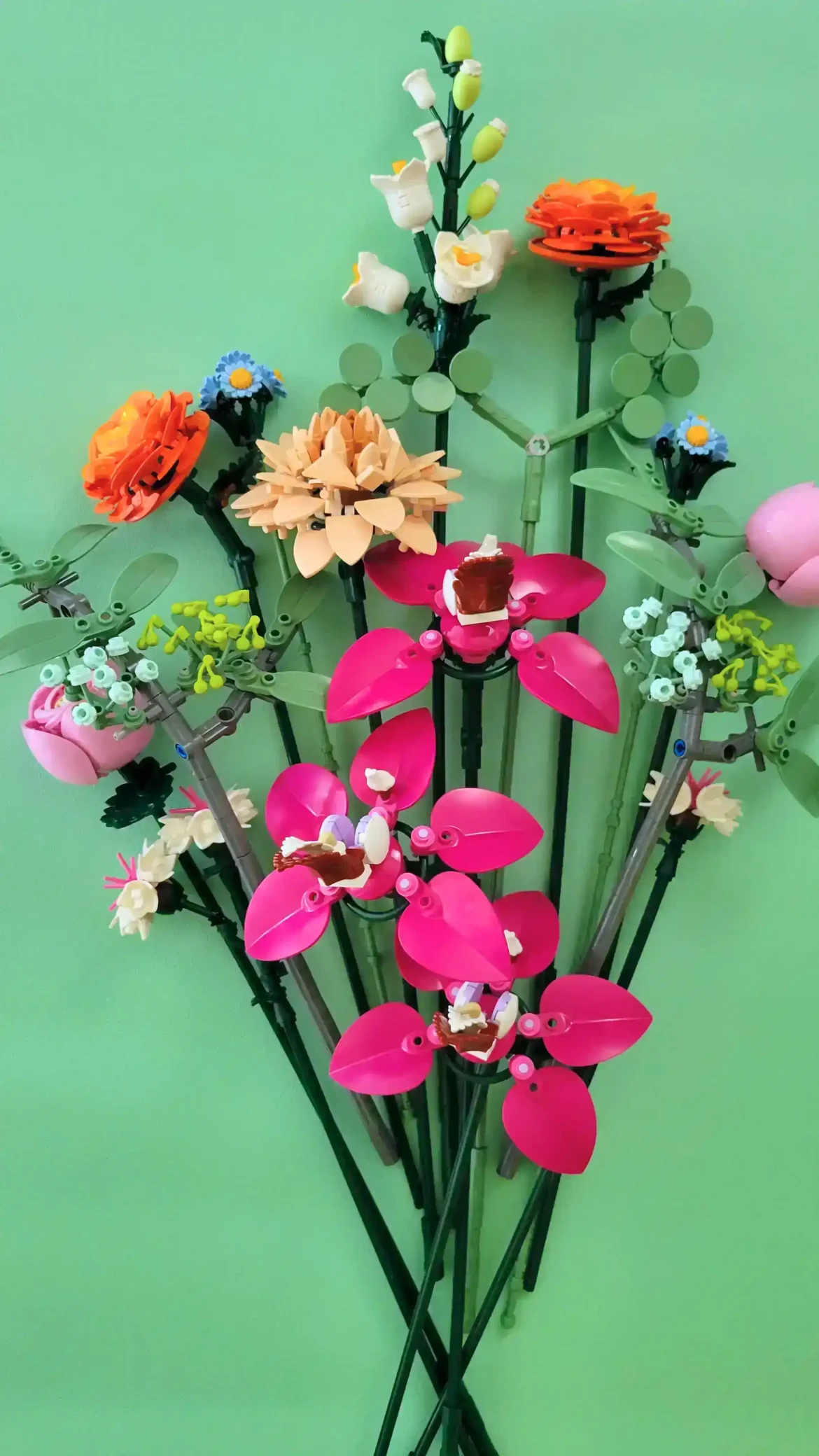
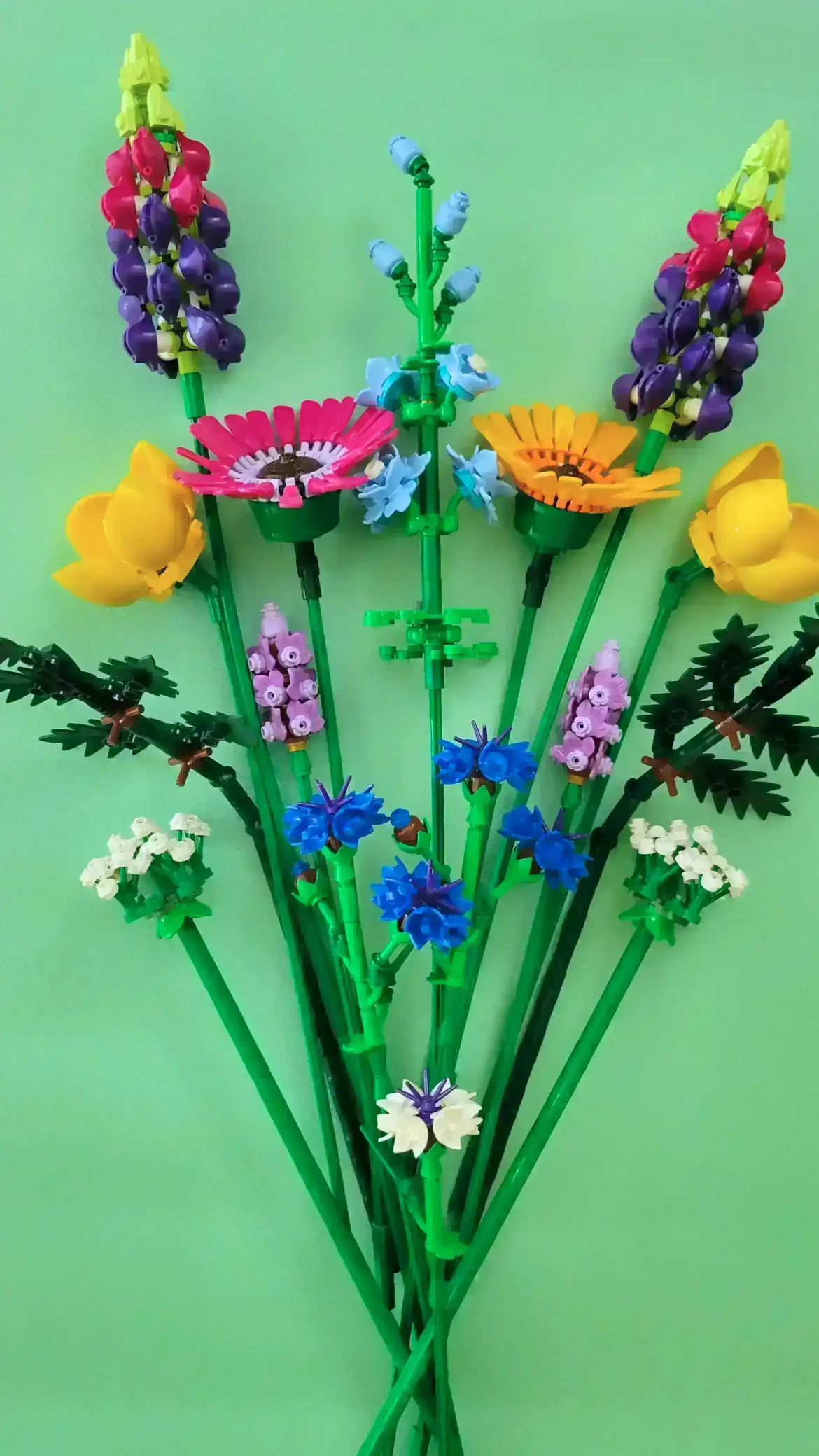
If your LEGO flower display has started collecting dust (and maybe a few cat hairs), don’t panic, it happens to all of us. Learning how to clean your LEGO flowers safely keeps your colorful petals shining bright and your whole setup looking brand new. The best part? You don’t need fancy tools or cleaning sprays, just a few gentle tricks that work like magic without scratching or fading your builds.
Most LEGO Botanicals fans don’t think about cleaning until their once-gorgeous display starts looking a little dull. A light layer of dust can sneak up fast, especially if your flowers live on a desk, shelf, or anywhere near a fan. And if you live with pets, let’s be honest, fur will find its way onto everything, even your roses.
Keeping your LEGO flowers clean isn’t just about looks, though. Regular cleaning helps preserve the pieces, keeps colors vibrant, and prevents small cracks caused by long-term buildup or moisture. Whether you’re displaying the Bouquet of Roses (10328), Wildflower Bouquet (10313), or the Orchid (10311), a little care goes a long way in keeping your bricks looking crisp and camera-ready.
So before you grab a random towel or spray bottle, let’s go over the right way to do it. Here’s how to clean LEGO your flowers without scratching them or losing those delicate petals in the process.
Table of Contents
Why Cleaning Your LEGO Flowers Matters
Dust might not sound dangerous, but it’s one of the biggest enemies of any LEGO Botanicals display. Over time, it builds up between petals, dulls the color, and makes your once-bright blooms look like they’ve been sitting in storage for years. The good news? A few minutes of regular cleaning can keep your flowers looking showroom fresh.
Keeping up with how to clean your LEGO flowers isn’t just about looks. Dust and humidity can slowly break down plastic finishes, especially on lighter-colored pieces like the LEGO Orchid (10311) or the Lotus Flowers (40647). If you’ve ever noticed faded petals or a sticky texture, that’s a sign it’s time for a gentle deep clean.
Another reason to stay consistent is longevity. Whether your set is new or retired, like the Bird of Paradise (10289), keeping it clean helps it last longer and keeps resale value high. Even if you don’t plan on selling, it’s still nice to know your display looks just as good as the day you built it.
And let’s be honest, nothing ruins a good photo faster than dusty petals. If you share your LEGO flowers online, keeping them clean means every close-up looks professional and polished without editing tricks.
💡 Quick Tip: Dusting your LEGO flowers every 2-3 months keeps them in display-ready condition and saves you from needing an intense deep clean later.

How to Clean LEGO Flowers Without Scratching Them
Cleaning LEGO flowers doesn’t have to be stressful. The key is to be gentle and patient. Each flower set has delicate shapes, small petals, and curved pieces that can trap dust in weird places. Whether you’re cleaning your Bouquet of Roses (10328) or Wildflower Bouquet (10313), these steps will help keep everything spotless without causing scratches or fading.
1. Start with a Makeup Brush or Duster
The simplest way to begin cleaning is with a soft brush. A clean makeup brush, or gentle duster works perfectly for removing surface dust from petals and stems. Start at the top of your build and work downward so you don’t just move dust around.
Avoid stiff bristles, they can leave tiny scratches on glossy LEGO pieces, especially the curved petals found in sets like the Orchid (10311) or Hibiscus (10372).
💡 Extra Tip: A camera lens brush or keyboard duster works great for hard-to-reach spots between petals or under leaves.
2. Use an Air Blower for Tight Spots
For areas where dust hides deep between stems, an air blower is your best friend. These small, manual pumps (like the ones used for camera lenses) push out gentle air to dislodge debris.
Avoid canned air, it’s too strong and can loosen or even pop off smaller LEGO elements. The manual blower gives you more control and won’t damage fragile connections.
💡 Use short, quick bursts of air to remove dust from corners, small gaps, or inside detailed flowers like the Dried Flower Centerpiece (10314).
3. Deep Cleaning with Lukewarm Water
If your LEGO flowers are looking extra dusty or have been sitting out for months, a gentle wash can bring back their shine. Remove the petals or pieces from the build first to avoid loosening delicate connections.
Fill a bowl or sink with lukewarm water (not hot) and gently swish the pieces around for a few minutes. You can use your fingers or a soft microfiber cloth to lift any buildup.
Rinse them with clean water, then lay everything flat on a towel to air dry.
🚫 Skip the soap and cleaners. Even mild dish soap can leave a residue that dulls the finish or makes the plastic slippery. AFOLs recommends plain water for a reason, it’s the safest way to keep your flowers bright and scratch-free.
4. Dry Carefully (No Heat!)
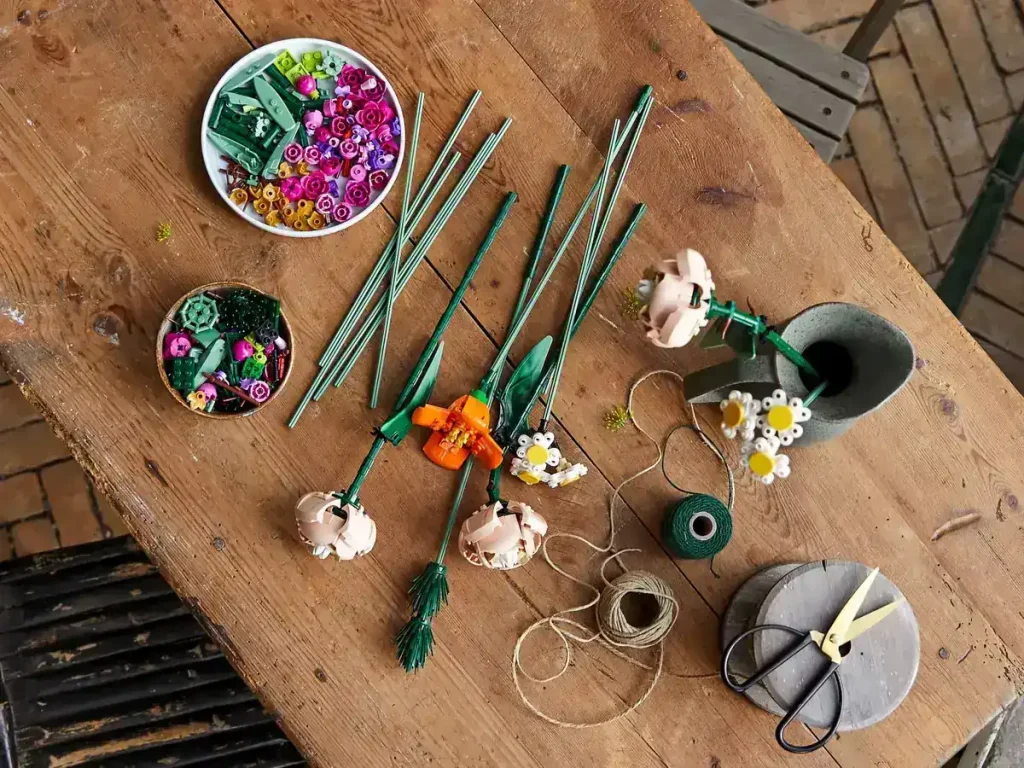
Once your LEGO flowers are clean, drying them right matters just as much. Use a soft microfiber cloth to pat away extra water, then lay the pieces flat on a towel. Let them air dry completely before rebuilding to avoid moisture spots or dull residue.
🚫 Avoid heat tools like hair dryers or space heaters. They can warp or fade the plastic faster than you can say “limited edition.” Patience pays off here, air drying keeps your petals perfect.
5. Prevent Future Dust Build-Up
Want to avoid deep cleaning marathons? Display your LEGO Botanicals somewhere dust does not settle easily. A glass cabinet, bookshelf, or high ledge keeps things cleaner longer.
Lightly dust once a week with your makeup brush or air blower. It takes less than a minute and saves you from a full rebuild later. Keep your sets away from kitchens, windows, and humidifiers, since oil, steam, and sunlight can slowly dull the colors.
💡 Pro Tip: If you live somewhere humid, toss a small silica packet near your display. It quietly keeps moisture in check while you pretend you are not already planning your next flower build.
Best Cleaning Tools for LEGO Botanicals
Having the right tools makes cleaning LEGO flowers faster, easier, and way less stressful. You don’t need anything fancy, just a few household items that are gentle enough to protect your petals but effective enough to actually get the job done.
Best Cleaning Tools for LEGO Botanicals
| Tool | Why It Works | Avoid If… |
|---|---|---|
| Makeup brush | Perfect for removing dust from petals and stems without scratching. | The bristles are stiff or dirty. |
| Microfiber cloth | Great for polishing shiny LEGO pieces and picking up fine dust. | It’s rough or used with cleaners. |
| Compressed air or air duster | Reaches tiny gaps between leaves and petals without contact. | The pressure is too strong or aimed too close. |
| Gentle duster | Ideal for regular upkeep and quick touch-ups between deep cleans. | It’s heavily used or sheds fibers. |
| Distilled water | Safe for occasional deeper cleaning when applied with a damp cloth. | You soak the pieces or use hot water. |
💡 Pro Tip: Store your cleaning tools near your display area so you’ll actually use them. A quick dusting here and there keeps your LEGO Botanicals in perfect shape without needing a full cleaning day.
When to Deep Clean vs. Light Dusting
Not every cleaning session has to be a full teardown. Knowing when to do a quick dusting versus a proper wash helps you keep your LEGO flowers looking fresh without making cleaning feel like a chore.
A light dusting is your first line of defense. It takes just a minute or two and prevents buildup before it starts. Use a soft makeup brush or air blower to remove loose dust once every week or two, especially if your sets are out in the open. This simple habit keeps your petals vibrant and your display photo-ready all year long.
A deep clean is best every three to four months, or whenever your LEGO Botanicals start looking dull or sticky. It is also a good idea after a move or a major rearrangement. Take the flowers apart carefully, soak the pieces in lukewarm water, rinse, and let them air dry on a soft towel.
💡 Pro Tip: Always reassemble your flowers only after every piece is completely dry. Even a little leftover moisture can lead to sticky residue or dull spots over time.
If you are a collector who rebuilds displays by season (like switching from summer Petite Sunny Bouquet (10347) to fall Dried Flower Centerpiece (10314), make cleaning part of the transition. You will keep every set in perfect condition and make your seasonal rebuilds more enjoyable.
Think of it like plant care, just easier. No watering, no pruning, just a little dusting and your blooms stay perfect year-round.

Protecting Your LEGO Flowers from Hidden Damage (Including Essential Oils)
Keeping your LEGO flowers clean is important, but protecting them from invisible damage matters just as much. One of the biggest hidden threats to LEGO Botanicals isn’t dust or sunlight, it’s essential oils.
Essential oils might smell amazing, but they’re terrible for LEGO bricks. The mist from oil-based diffusers or humidifiers can slowly eat away at the plastic, making it brittle, cracked, and discolored over time. Even if you never spill a drop, the oil particles floating in the air can settle on your flowers and cause chemical damage.
How Essential Oils Harm LEGO Bricks
- Chemical reaction: Essential oils contain compounds like limonene (found in citrus oils) that act as solvents. These can break down ABS plastic, the material used in all LEGO bricks.
- Destructive effects: Over time, the oils weaken the plastic, causing it to lose flexibility and crumble more easily. Prolonged exposure can ruin the glossy finish on petals and leaves.
- Mist vs. direct contact: Even if you never touch your flowers, diffuser mist is enough to cause slow deterioration. The particles in the air land on your builds and react with the surface.
How to Prevent Damage
- Keep diffusers away: Never use an essential oil diffuser or oil-based humidifier in the same room where you display your LEGO flowers. Even a few feet of distance isn’t enough.
- Use plain water only: If you need a humidifier for comfort, choose one that runs on plain water without oils or additives.
- Clean and display safely: Stick with LEGO’s recommended cleaning method, lukewarm water, and air drying. For dust maintenance, use a soft makeup brush or air blower to keep your builds spotless.
- Check your setup: If your flowers are near an essential oil diffuser, move them right away. It’s better to protect them before any damage sets in.
💡 Pro Tip: If you love diffusing scents, place your diffuser in another room or use wax melts instead. Your LEGO flowers (and your wallet) will thank you later.
Final Thoughts
Cleaning LEGO flowers might not be the most exciting part of collecting, but it is one of those small things that makes a big difference. A few minutes of care keeps your LEGO Botanicals looking fresh, colorful, and ready to impress anyone who walks by.
Whether you are using a soft makeup brush for quick touch-ups or doing a full deep clean with water, taking time to maintain your builds helps them last for years. It also gives you the perfect excuse to handle your sets again and maybe rearrange that vase you swore was already perfect.
The best part is that once you know how to clean your LEGO flowers safely, it becomes second nature. You will notice when they start looking a little dusty, grab your brush, and have them shining again before your coffee even gets cold.
Remember, these blooms do not wilt, fade, or die, but they still deserve a little attention. Treat them right, and your LEGO flower collection will keep looking as bright and cheerful as the day you built it.
💬 Your turn: How often do you clean your LEGO Botanicals? Share your favorite cleaning tricks or product recommendations in the comments. You might just inspire another builder to finally dust their display.